Announcement
Joint Field Survey and Workshop with NCDR on Disaster Risk Research: Insights from Hualien
From January 19 to 22, the National Research Institute for Earth Science and Disaster Resilience (NIED), Japan, conducted field surveys in disaster-affected areas of Hualien County in eastern Taiwan in collaboration with its partner institution, the National Science and Technology Center for Disaster Reduction (NCDR), Taiwan, under the Memorandum of Cooperation. A joint workshop followed to discuss future research collaboration.
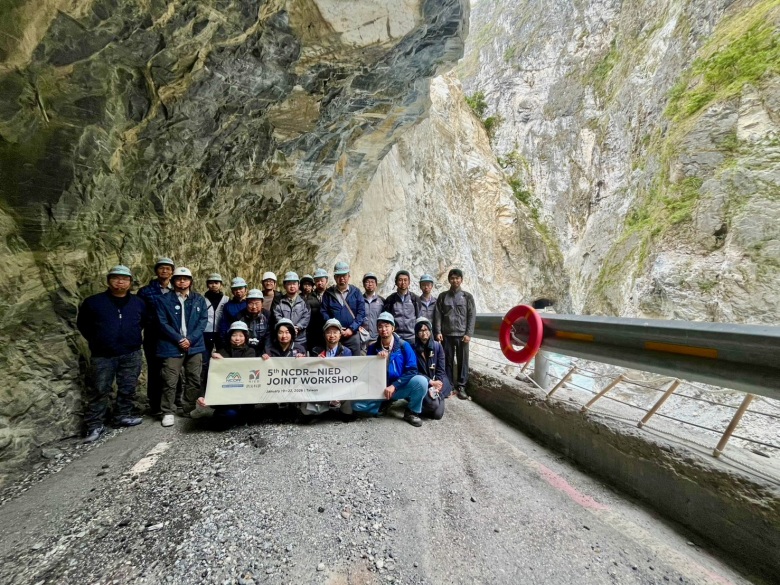
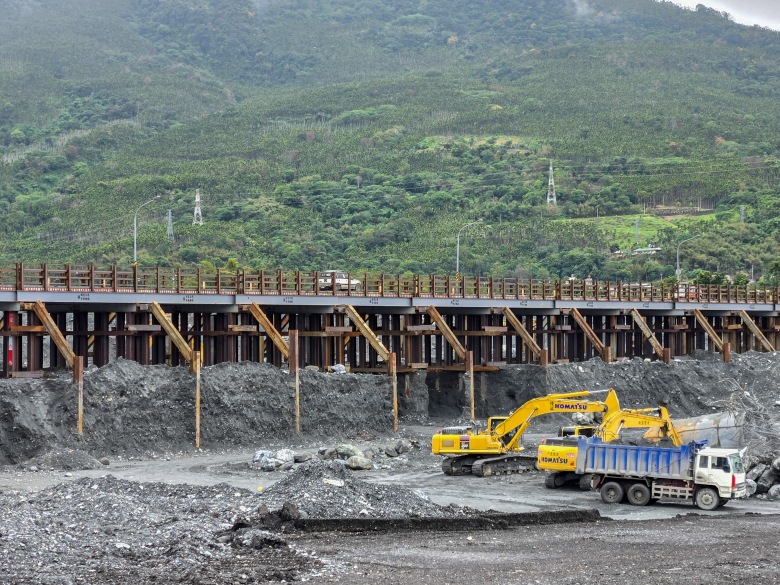
Field observations were conducted around Taroko National Park, Guangfu Township in the Longitudinal Valley, and the Matai’an Creek watershed, which experienced landslide and flood impacts associated with the 2024 Hualien earthquake and subsequent heavy rainfall, including areas affected by a landslide-dam breach and associated debris flows and flooding. Participants observed cascading disaster processes in which earthquake-induced slope instability was followed by heavy rainfall associated with typhoons, leading to river channel blockages, landslide-dammed lakes, and subsequent debris flows and flooding from dam breaches. In mountainous areas, hazards may persist due to unstable slopes and increased sediment supply, and intensified rainfall and climate change effects are further increasing disaster risk.
In addition to observing government-led recovery works, the team visited the Tzu Chi Foundation and received an overview of its disaster relief activities. The foundation provides multifaceted recovery support during major disasters, including material assistance, livelihood support, and psychological care, supported by a well-organized volunteer system and an extensive support network.
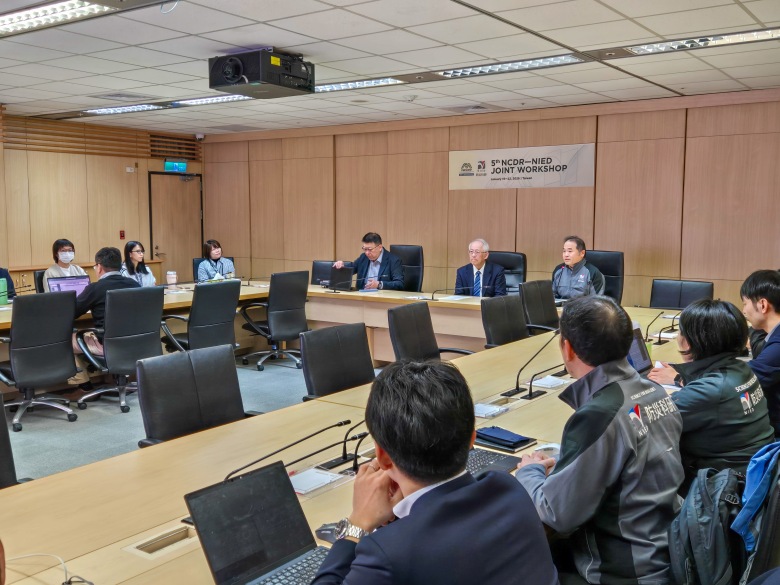
At the workshop, participants emphasized the importance of integrating multidisciplinary approaches, including remote sensing, numerical simulation of flood and barrier lake breach risks, and social science approaches, to address increasingly complex disaster risks. In particular, satellite- and IoT-based monitoring of mountain hazards, cascading disaster mechanisms, and the assessment of secondary disaster risks in affected areas were discussed.
Participants noted the value of damage assessment and recovery cost estimation to support risk-informed recovery decisions. They also discussed the methodology for assessing recovery progress and outcomes, and conducting comparative research that considers regional differences.
Researchers also expressed strong interest in post-disaster housing reconstruction and relocation choices, as well as the long-term sustainability of affected communities. Social challenges such as population decline, aging, and shifts in local industries were seen as key factors shaping recovery decisions.
Participants exchanged views in three thematic groups: Storm, Flood, and Landslide Disasters & Satellite Image Processing, Urban Disaster Resilience Engineering, and Social Resilience. Researchers from both institutions have developed close working relationships through longstanding exchanges and, since 2024, have engaged in dialogue with practitioners involved in on-site disaster response in Japan and Taiwan.